Second-Hand Shopping Guide for Building a Capsule Wardrobe
Published Date:
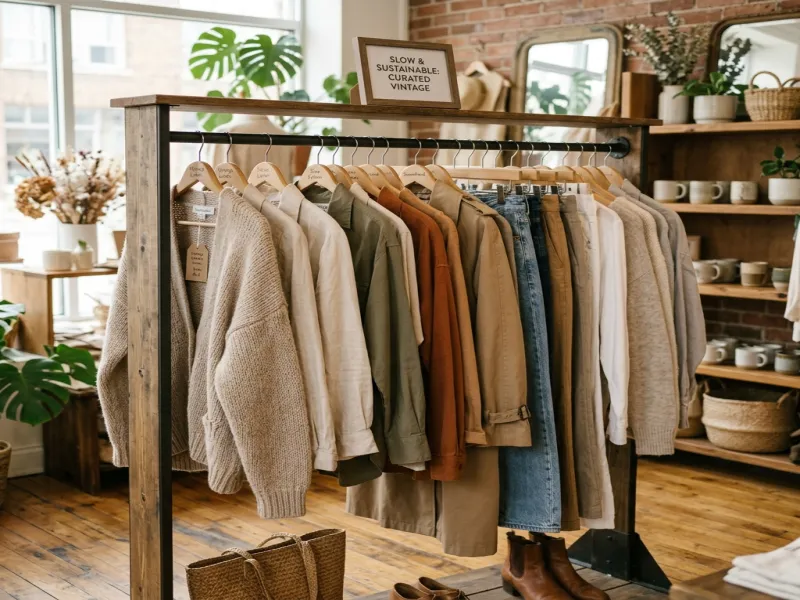
The concept of a capsule wardrobe is fundamentally rooted in intention. It is about moving away from the chaotic cycle of impulse buying and instead cultivating a smaller, highly versatile collection of clothing that you truly love and wear constantly. While many people assume that building a capsule wardrobe requires investing thousands of dollars in high-end, brand-new sustainable basics, there is a much more accessible, affordable, and eco-friendly path: second-hand shopping.
Thrifting and vintage shopping have evolved far beyond dusty racks and mothball smells. Today, the second-hand market is a treasure trove of high-quality fabrics, unique silhouettes, and timeless staples that are perfect for foundational wardrobe building. Furthermore, choosing pre-loved clothing is one of the most powerful ways you can personally combat the environmental devastation caused by the fashion industry, a topic we explore deeply in our analysis of fast fashion vs slow fashion.
However, navigating the sheer volume of a thrift store while trying to adhere to a strict capsule color palette and style aesthetic can feel overwhelming. Without a strategy, you risk walking out with quirky pieces that don’t match anything else you own, entirely defeating the purpose of a capsule. In this guide, we will break down the expert strategies for successfully building your dream capsule wardrobe entirely through second-hand shopping.
Step 1: Define Your Capsule Before You Shop
The golden rule of successful second-hand shopping is to never walk into a thrift store blindly. The chaos of a second-hand shop will easily derail your intentions if you don’t have a clear roadmap. Before you even look at an online resale app or step foot in a vintage boutique, you must define the parameters of your capsule wardrobe.
Start by auditing your current lifestyle. What do you actually do on a daily basis? If you work from home, you don’t need five tailored blazers, no matter how great the thrift store deal is. Next, define your core color palette. A successful capsule usually relies on a foundation of three to four neutral colors (like black, navy, camel, and cream) and one or two accent colors.
Finally, create a specific, non-negotiable shopping list. If you are just starting out, you might find our beginner’s guide on how to build a capsule wardrobe from scratch helpful for identifying your necessary staples. Your list should be highly specific. Instead of writing “a sweater,” write “a chunky, neutral-toned crewneck wool sweater.” When you shop with a laser-focused list, you automatically filter out 90% of the visual noise in the store.
Step 2: Know Your Fabrics
When you are buying second-hand, you are often relying on the physical garment rather than a brand name to dictate its quality. Many modern fast-fashion brands produce clothing that looks great on the hanger but falls apart after three washes. To build a capsule that will last for years, you must become an expert at identifying high-quality natural fibers.
Whenever possible, avoid synthetic materials like polyester, acrylic, and nylon. These fabrics trap sweat, pill easily, and shed microplastics into the water supply. Instead, train your hands to recognize the feel of natural fibers:
- Cotton: Look for 100% cotton, especially heavy-weight denim and crisp poplin shirts.
- Wool: Merino wool, cashmere, and alpaca are incredibly durable, temperature-regulating, and perfect for capsule sweaters and coats.
- Linen: A quintessential summer fabric that becomes softer and more beautiful with every wash.
- Silk: A luxurious, breathable fabric perfect for versatile blouses and camisoles.
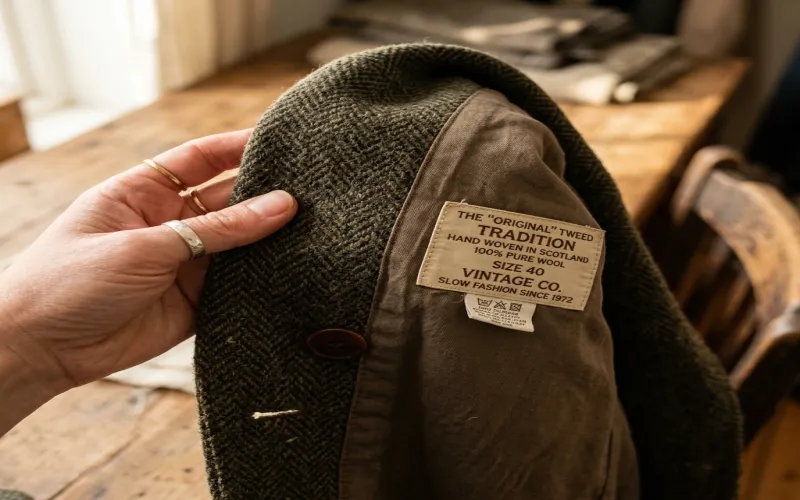
When you find a piece you like, immediately check the interior care tag. A vintage blazer made of 100% wool is a capsule masterpiece; a modern blazer made of 100% polyester is something to leave on the rack.
Step 3: Inspect for Flaws and Fit
Second-hand clothing has lived a previous life, which means it may carry some battle scars. Before purchasing a staple piece for your capsule, you must subject it to a rigorous physical inspection.
Check the high-wear areas first. Look at the underarms for yellowing or deodorant buildup. Inspect the crotch and inner thighs of trousers for pilling or thinning fabric. Check the collar and cuffs of shirts for fraying. Test every single zipper to ensure it runs smoothly, and make sure all the original buttons are intact (or that you are willing to replace them all).
When it comes to fit, you have to look past the size on the tag. Vintage sizing is notoriously vastly different from modern vanity sizing; a vintage size 12 might fit like a modern size 6. Furthermore, garments may have been shrunk or altered by their previous owners. You must try everything on.
When trying items on, remember that minor fit issues can be fixed, but major structural issues cannot. If a blazer is too tight in the shoulders, leave it. But if a pair of high-quality wool trousers fits perfectly in the waist but is two inches too long, that is an incredibly easy and cheap fix for a local tailor. Learning to see the potential in a slightly ill-fitting but high-quality garment is the secret weapon of the best vintage shoppers.
Step 4: Master the Art of Online Thrifting
While physical thrift stores are great for the thrill of the hunt, online resale platforms (like Depop, Poshmark, Vinted, or The RealReal) are often much better for building a specific capsule wardrobe. The ability to filter by brand, color, size, and material is invaluable when you are looking for that specific “chunky, neutral-toned crewneck wool sweater.”
To succeed in online second-hand shopping, you must know your exact measurements. Do not rely on sizes. Measure your favorite fitting pair of pants (waist, rise, and inseam) and your favorite shirt (pit-to-pit and length). When you find an item online, politely ask the seller for these specific measurements to ensure a perfect fit before you buy.
Additionally, use highly specific search terms. Instead of searching for “black pants,” search for “women’s 100% wool high-waisted black pleated trousers.” You will get fewer results, but they will be exactly what you are looking for. Save your searches on these apps so you are notified the moment your holy grail item is listed.
Frequently Asked Questions
Is it hygienic to buy second-hand clothing?
Yes, absolutely. The vast majority of second-hand stores wash or steam their clothing before putting it on the sales floor. Regardless, you should always wash or dry-clean any second-hand garment immediately after bringing it home, before integrating it into your closet.
What items should I avoid buying second-hand?
For hygiene and safety reasons, you should generally avoid buying second-hand underwear, bathing suits (unless brand new with tags), and athletic gear that is heavily sweat-stained or has lost its elasticity. Shoes can be bought second-hand, but inspect the footbed carefully; if it is heavily molded to someone else’s foot, it may cause you pain.
How do I get the “thrift store smell” out of vintage clothes?
The distinct vintage smell is usually a combination of dust, mothballs, and time. For washable items, soak them in a mixture of cold water and half a cup of white vinegar for an hour before washing normally. For dry-clean-only items like wool coats, hang them outside in fresh air and indirect sunlight for a day or two, or spray them lightly with cheap vodka, which neutralizes odors as it evaporates.
Can you build a capsule wardrobe entirely from thrift stores?
Yes! It takes more time and patience than buying everything brand new from a department store, but it is entirely possible. The key is to view capsule building as a marathon, not a sprint. Take your time to hunt down the perfect pieces rather than settling for “good enough.”
Does second-hand shopping really help the environment?
Immensely. The fashion industry is responsible for roughly 10% of global carbon emissions and consumes massive amounts of water. By buying second-hand, you are extending the life cycle of a garment, keeping it out of a landfill, and not contributing to the demand for new resource extraction and manufacturing.
Building a sustainable, high-quality capsule wardrobe doesn’t have to break the bank. Download the Stil app today for personalized style recommendations, digital closet organization, and tailored advice on finding your perfect capsule pieces. Get Stil App Now